The steel crushed flesh and bone—and bone ripped away sight.
Marianne Hassan and her husband Albert drove from a Christening to pick up their baby at grandma’s. It was May 25th, 1997, the Memorial Day weekend—and it was drizzling.
The Hassans never got to pick up baby Kevin. Nor would either see him again.
At a Merrick, NY intersection, Anthony Montuori’s 5,000 lb. Chevy SUV T-boned Hassan’s 3,300 lb. Chrysler and hurled it fifty feet into a tree. The suburban’s high front end pushed the sedan’s door into Albert’s chest, and internal bleeding killed him quickly. The Chrysler hitting the tree drove Marianne’s nose through her optic nerve—blinding her forever.
The only grace to the horror was that their baby was still safe in his grandma’s arms.
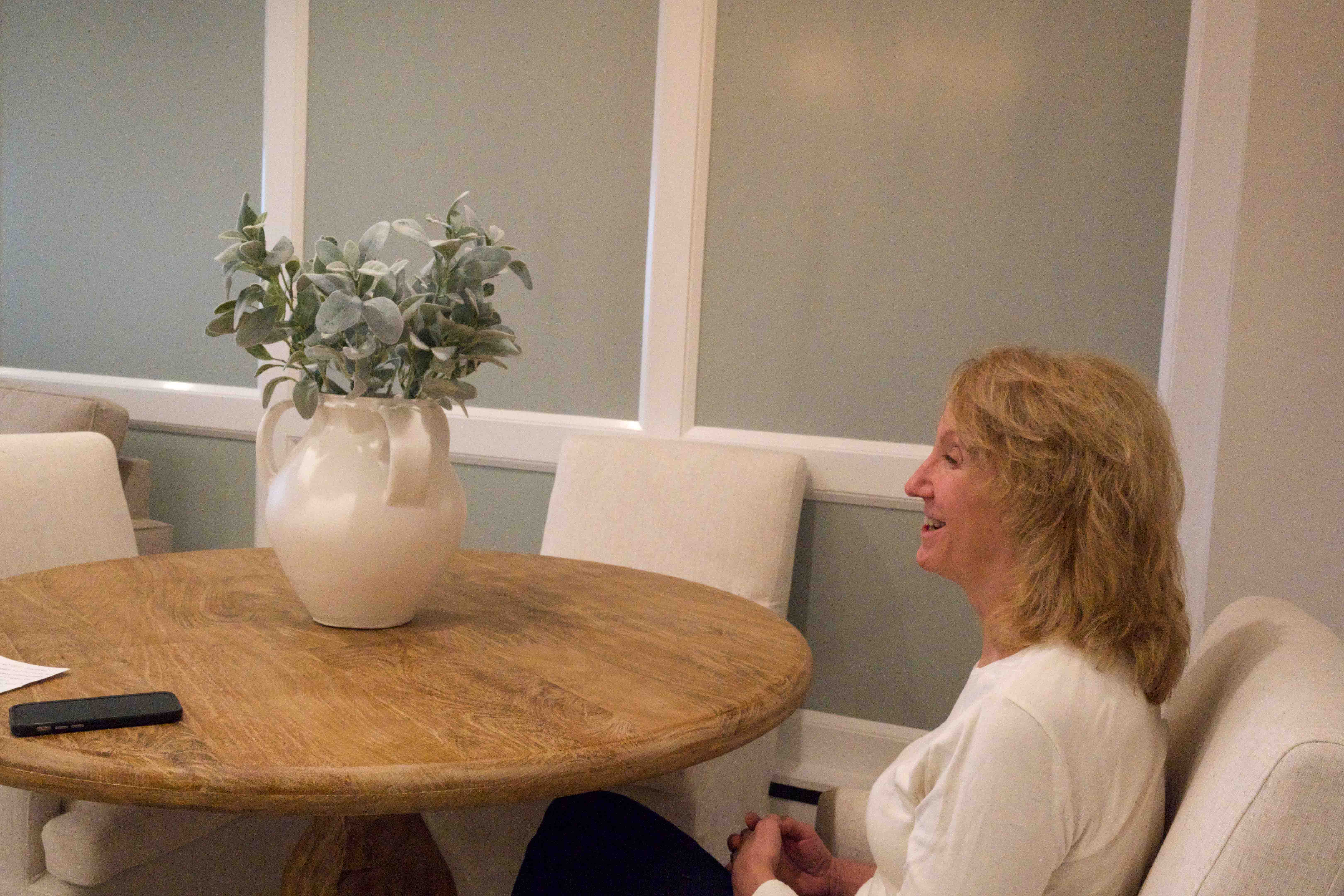
I spoke with Marianne at her oceanfront condo in Long Beach, NY. Marianne is a beautiful woman, but she can’t see that beauty in the mirror, nor can she see her fantastic 6′ 2″ son, now twenty-six. Nor will he ever see his dad.

Marianne had known Albert Hassan since 1989; they married in “92. He was a good man, she said.
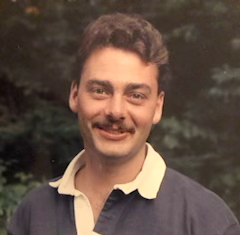
Marianne had been married once before but it ended in divorce after four months. This time it was different. She and her husband were happy, they just had baby, life was good.
An engineer at Grumman, Albert was a volunteer fireman at Merrick’s Volunteer Fire Dept. and an honorary volunteer fireman at the Hicksville department for his former work there. Albert consistently gave blood, platelets, and bone marrow to the New York Blood Bank; they reported he donated forty-two pints of his blood to help others.
At his arraignment, Anthony Montuori apologized profusely. Marianne said Montuori told her attorney in jail, “I will do anything for her; what do you want me to do? Do you want me to testify? Whatever, I’ll do it for her.”
Marianne didn’t want Monturoi to go to prison. She said that’s what her husband would have wanted. Albert was never looking for revenge. She said if people offended, “He just wouldn’t take it to heart; he’d just let it roll off his back.” She said, “He was a good soul. He was always forgiving. Anytime somebody needed help—he was there.”
“Everybody in life makes mistakes,” Marianne said. “It’s not like he took a gun and started shooting it around at people. He made a bad decision one day; that doesn’t make him a bad person, and I just hoped that after that, he’d go on and do something good in life,” she said.
Marianne is a woman of faith, a Catholic. She said of Anthony Montuori, “He did what many, many, many people did.”
But Albert’s parents felt differently; they wanted Montuori to go to prison, and he did for five years.
As I write this, dear readers, I think, how many of us had “one” too many at a Christmas party or any celebration, over-sampled at breweries or wineries, happy hours, and drove? Many of us—never—some of us sometimes. Too many of us—too often.
I recall my younger years. I know what it’s like to have “a few” and then feel confident, “I got this,” and drive. But for the grace of God, once again—I got home without an accident. As did so many of my friends.
But today, every 45 minutes, through DUIs, someone will be missing from the dinner table—forever: CDC report.
Calling for long sentences in DUI deaths is—after the fact. It’s a consequence—after the deaths. But there’s not much difference in intent when one of us drives DUI and gets home okay—and one who kills. So maybe it’s best to—diminish the will—to risk DUI.
- Diminish it with lifestyle changes: Make a designated driver or an Uber part of our routines.
- Diminish it with increased enforcement and sanctions: alcohol ignition interlocks sobriety-check roadblocks with publicized results. Sure, they will irritate some drivers about the delays and anger others caught with a DUI. But effective proactive action will cause some of those irritated and angry never to have to live with cold-sweat nights recalling their killings—or losing one of their own through another driver’s—mistake.
- Diminish it with legislation: Illegal blood alcohol concentration in America is 0,08%. (Utah’s is 0.02%). But many countries have 0.05%.
Sweden has 0.02%, and drunk drivers can pay fines based on income level during the offense. In the U.S, 31% of driving fatalities are from alcohol. In Sweden, the rate is 18%. I have an essay follower in Sweden who says he’d have no problem if it were 0.0%. He never—drink drives—that’s what they call it there. Smart man, progressive country.
Some of us today might still think it’s too much of a hassle to call for an Uber or Lyft: “I can’t come back in the morning, I have work to consider, I don’t have the— time.” But in a flash, you might be doing—time—upstate—and have lost your career, your home.
Surrender—a word we Americans loathe— to the new realities of American life. DUI has for a decades become more and more, a loathsome thing to do. Thirty-two Americans die from alcohol related car accidents every day. So, change with the times. Make the idea of driving under the influence just not worth it.
Marianne never married again but had a relationship with an extraordinary man, Steve Skryneck, a Lieutenant with Nassau County’s Police Dept. With Marianne on his arm, Steve rose to become Nassau County’s Chief of Police. He later retired and became Southampton’s Chief of Police as well.
The couple enjoyed a loving life together for twenty-five years. But on Valentine’s Day, 1992, Steve received a bad blood test result. And soon, way too soon, his diagnosis of Myelodysplastic syndrome (MDS), a bone marrow disease, quickly turned to Acute Myeloid Leukemia (AML). Marianne said, “It went from we have hope to nothing we can do.” So, Marianne took Steve home.
Steve was a drummer in a band in high school. So, the young band he played with showed up to send Steve off. Marianne smiled when she said, “They were in his bedroom, they were laughing and joking with, ‘remember when?’ They had a guitar, and they sang him on to his next life.” He was only home twenty-four hours, and while his friends were singing—Steve died. Steve received his bad blood test on Valentine’s Day and died in October.
Marianne’s cousin said at the funeral, “I just moved to Long Beach, and I love it.” It sounded cool, so Marianne checked out our City by the Sea. And here she now lives.
Marianne works for her brother, the famed McDonald’s “Wunderkind.” He began working at McDonald’s at sixteen and now owns thirty-one of them. Marianne does “the insurance, claims, permits, and that sort of stuff,” she said.

I spoke with Anthony Montuori, the driver of the SUV
I didn’t know how to contact Anthony Montuori but I tried by leaving a message on what I thought was his or his friend’s phone. I was a bit surprised but grateful when Anthony returned my call; the friend had forwarded the message. I appreciate you, Anthony’s friend.
Anthony could have just ignored my request for him to revisit such a painful time and to see it here in this essay. I won’t relate all he said here, but I’ll say this: Anthony Montuori is a good man who made a mistake many of us have made but with drastically different results.
He said his birthday was May 25th, the day of the crash. He came from a restaurant celebrating his birthday with his good friend and family. Anthony was to be at the wedding party of his friend’s upcoming marriage.
Anthony’s girlfriend was with him when he collided with the Hassans. She was not injured; Anthony only suffered a minor injury to his ankle. He tried to remove Albert Hassan from their car, he said, and he remembered seeing the baby seat in the back and feared a baby was in there, too.
At the time of the accident, Anthony said, his blood alcohol concentration (BAC), was .15, just reaching the threshold of DWI at that time. He took a plea and went to prison for five years. Anthony lost his contracting business and his home. He said he’s sixty-one now and lives in a basement apartment. He said, “I pray for her.”
A few weeks ago Anthony attended a 30th birthday party for a troubled man he had known since his youth. He said, “I brought this up towards the end of the night. I had told him about my situation and how we have to turn things around, look for the positive. And he texted me a couple of days later saying how grateful he was to hear all my advice.” Anthony said, “It made me feel so good that he responded like that.”
Attending church is not Anthony’s thing these days but he said, “I felt like someone was looking out for me, even In prison.” He met good people, COs, (Correction Officers) program managers. He said after two years of Maximum Security at Butler Correctional Facility, they let him use his skills to work outside. He worked on state buildings, highway signs and fixing environmental conservation equipment. He was very grateful for that. After release he was helped by so many other friends and strangers. He said, “That’s how he got this job.”
Anthony recalled the moments of May 25th, 1997: He left the restaurant at about 7:30 p.m. He went to his car at the restaurant’s parking lot but had to return inside for a gift he had left. Then he met people he knew exiting the parking lot, and he chatted through the car window. After stopping at his girlfriend’s to pick something up, Anthony headed north on Frankel Blvd in Merrick. He said he usually would turn right onto Merrick Rd. to go home to Massapequa, but this time, he did not and drove straight across Merrick Rd on Frankel toward Sunrise Hwy. When he got to the first intersection after Merrick, at Frankel and Richard Street, the horror unfolded. The horror that took away a husband, took away his wife’s sight, her spleen, damaged her lungs, her liver— took away a dad from his son.
I wondered about all the “Sliding Doors” moments:
- Two delays in leaving the restaurant
- The stop at the girlfriend’s home
- The unusual change in route
What did they ultimately mean in the timing of causing the cars to come together at that exact moment at that exact place? What if Anthony didn’t forget the gift, or didn’t return for it; what if he didn’t stop at his girlfriend’s, or stayed just a bit longer, or didn’t change his usual right turn onto Merrick Rd?
Of course they mean nothing. We can dwell on minutia to see how moments, if different—could have made a difference. But the only difference that would have mattered was—to have chosen a ride home.
Throughout my interview with Anthony, his tone was calm and clear. He said he hoped my essay might make a difference in someone’s decision about drinking and driving. But when we spoke about Marianne in Long Beach, that calm changed.
He asked how I found Marianne. I told him someone pointed her out to me, and I interviewed her. We spoke about his whole life changing, and how life could have been different for him if the accident had not happened. He said, “I only get through it by saying, ‘I’m here, I’m alive.’ I don’t know why things happen.” For the first time, I could hear his voice tighten.
Then he said with difficulty, “Albert lost his life, Marianne is blind. Every time I think about it, I just can’t fathom trying to go through life not being able to see your child or…” His voice cracked, he paused, then said, “I’m getting choked….It’s hard…life isn’t fair.”
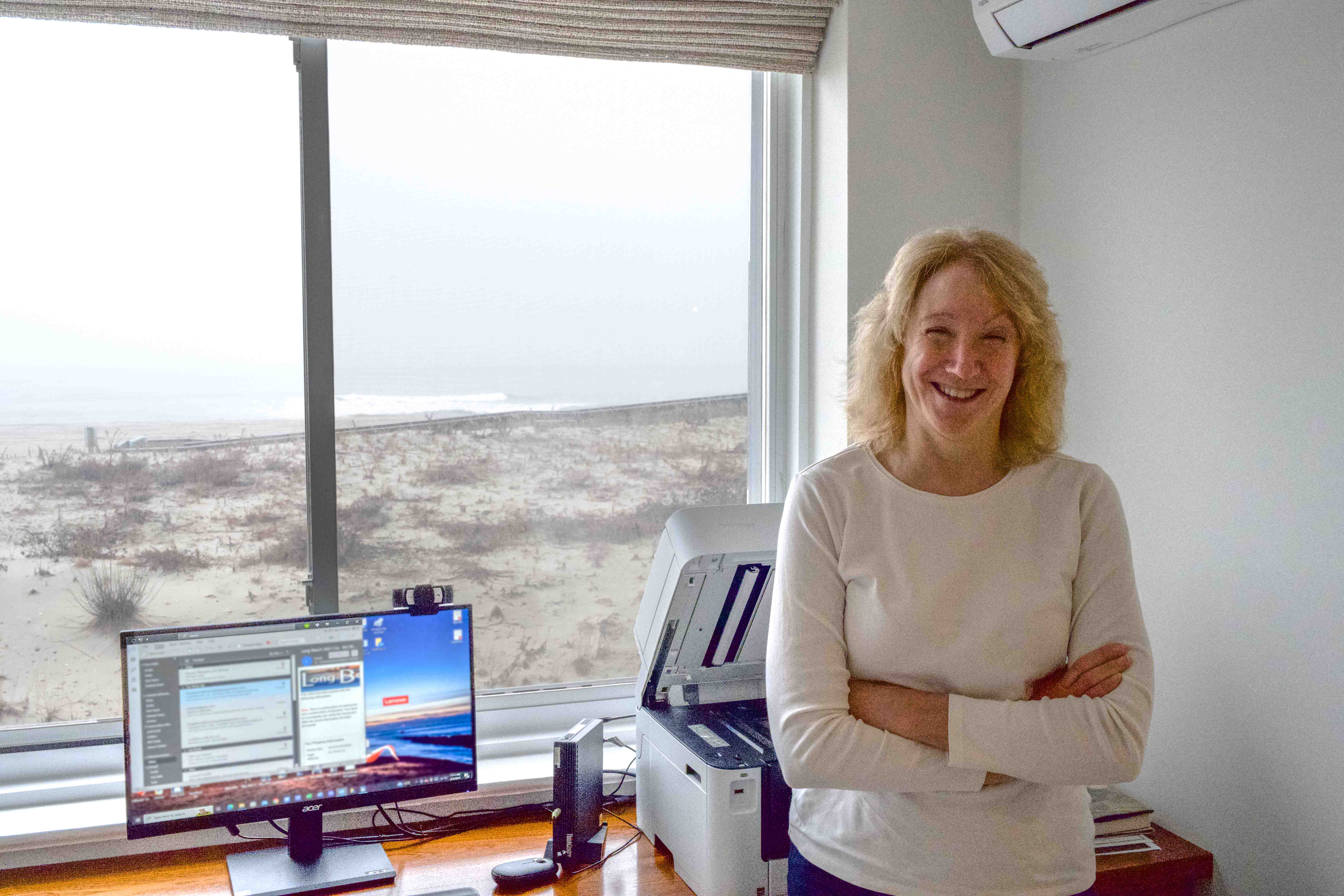
Marianne, a portrait of forgiveness, courage, resilience

The accident’s consequences echo over the decades. Anthony can see but lives in a basement apartment; Marianne lives with an ocean view but can’t see it.
But Marianne said, “I live in a world of hearing. I tell my family, ‘I go to sleep listening to the waves crashing, and I wake up listening to the waves crashing. I sit out on my balcony with my cup of coffee and enjoy the sounds.’ I love it in the summer when you hear the surfers, like five o’clock in the morning; it’s just fantastic.”
Marianne visited other potential condos in Long Beach, but they felt wrong. When she visited her current Shore Rd building, she said, “It just felt right; this is home.”
But her financial advisor said, ‘Wait a minute, I have to come and check this out.’ Marianne said, “She checked it thoroughly, the laundry room, everything, and told me—it’s spotless.”
Marianne said she cleans her own terrace windows, goes onto the beach and walks the boardwalk. I spoke with the super of the building who told me, he sees Marianne self sufficient. She separates the recyclables into their proper receptacles, picks up her own mail from the rows of mail boxes; she even does her own laundry.
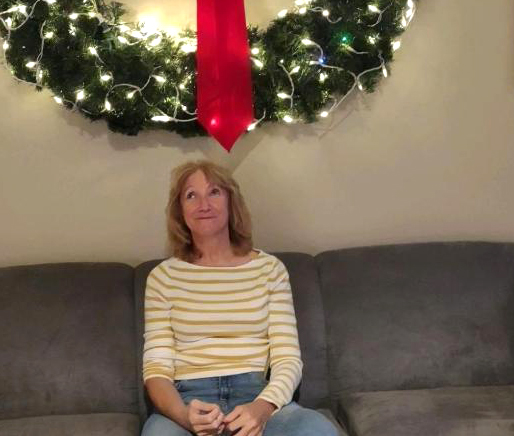
Marianne said, “I love the beach, California has nothing on us. Our beaches are so much prettier, our beaches are softer, East coast is definitely the way to go.” Marianne, her face radiant, said, I just love being here; it’s one of the best things I’ve done in my life.”
She said, “Labor Day weekend I could hear people racing, kids laughing and running. It is fantastic living here and hearing it.”
When Marianne and Steve Skrynecki lived in their Sag Harbor home, he would sing every morning, “Oh, what a beautiful morning.” He often told her she needed to remember those opening lines.
Newly arrived in Long Beach, Marianne walked the boardwalk with her sister-in-law. She said, “And as I walked with her, we came upon this man who said, ‘I’m an opera singer, and, I just wanted to know if you knew the first line of, “Oh what a beautiful morning.'”
Marianne said, “I took that as a sign.”
Be well,
Leebythesea
Categories: compassion


 leebythesea
Thank you Diane. Sorry I missed this.
LikeLike
Susan, thank you I’m sure she’s an inspiration to many of us.
LikeLike
Always love your stories Lee .. This one Hits Home !! Maryann is an unbelievable inspiration. She inspires me to get thru the tough times & be a kind person ….
LikeLike
Li’l Sis,
Yes, sad but a good example of grit and grace.
Thank you.
Big bro
LikeLike
I’m speechless. What a sad story…and very well written.
LikeLike
Amy,
Thank you so much for your kind words. I’m so glad to hear from someone who gets so much out of my humble writings. There are so many amazing stories in the people I come across and I feel certain people, like yourself, want to hear them. I guess I’m writing about special people—for the special people with whom my words resonate. And there are many of you out there. Thanks again, Amy. If you see me chugging along on my bike or trekking the sands, give me a shout.
Be well,
Lee
LikeLike
Hi Lee. What a profoundly sad yet beautifully written story. Thank you so much for caring so much about incredible humans. You are the best of the best. Kindest regards, Amy. Same Amy who writes fan letters to you. One day I hope to meet you on the boardwalk to watch the super full moon rise over the ocean.
LikeLike
thank you Kathleen. It was my pleasure. She’s a beautiful woman inside and out. I’m so glad she allowed me to bring her story, her grace, to others.
LikeLike
Such a beautiful, sad, and meaningful story. Thank you for sharing this. 🩷
LikeLike